vodka, virtue signaling, and clean girls = mean girls
There is a specific flavor of judgment creeping up in my algorithm that stands in a matching set and in painful contrast to summer, the season of celebratory beverages, the pull of giggling with friends on a sunny patio, or the pleasant tinkling chink of ice cubes in a glass. You’ve probably seen her, too: the pristine, ageless, pastel-hued wellness influencer holding up a mocktail as she boasts of all the alcohol she will never let past her perfect pout, because alcohol isn’t healthy and is therefore for the lazy unwashed masses. As if you so much as look at a fermented grape, you are actively failing at life.
This is so not my vibe. Not saying I’m going on a bar crawl or challenging you to a drinking competition anytime soon, but the internet has turned sobriety into the ultimate virtue signal and I’m frankly tired of it. Health is not a moral issue, nor are delicious adult beverages consumed in moderation, and it’s so very much not cool to “wellness wash” something that, at its most innocuous, has been part of human society for eons, and at its worst, is actually a life-threatening disease. Not a fitness hack.
Let’s clear something up right now: sobriety is a fantastic, life-changing path for many. I’m all for it, where it’s necessary. And I write this at a time when I myself am largely abstaining (mostly for reasons of vanity, truth be told.) But there’s a vast gap between truly casual, truly moderate drinking for pleasure (which, as an ex-barmaid, I very much understand is not possible for everyone) and actual liver-and-life destroying alcoholism. And again, self care and personal habits are not moral. Having a glass of wine does not make you bad, unclean or unhealthy, just like drinking green juice doesn’t punch your ticket to heaven.
There is a massive, beautiful, nuanced space between the disease of alcoholism, excessive consumption, self-medication, social dependence, the familiar ritual, or simply enjoying a tasty beverage with friends. And I figure I’m not the only one who is tired of being made to feel guilty by moralizing teetotaler party poopers on Instagram acting like there's no middle ground.

zest for life vs. health as spirituality
Truthfully, this is why I always felt so at home in the Pilates world. It didn’t proselytize on lifestyle choices, and you didn’t have to be a sober vegan to fit in (listen, some of the most fun, most beloved folks I know are sober vegans, so I’m not throwing shade, just illustrating a point.) For me, it stood in stark contrast to my experience in yoga spaces, which often felt like it was trying to equate health with spirituality. Pilates didn't do that.
Joe Pilates himself was a character—he famously loved his German schnapps, smoked cigars, and lived a robust, vibrant life well into his 80s. He believed, as he is famously quoted in his book “Return to Life Through Contrology,” that the point of physical fitness was to live life with “spontaneous zest and pleasure, “ and I found it incredibly refreshing to be in a method where people cared far more about your zest for life than how long it had been since you last ate a cheeseburger, had an Oreo, or knocked back a cocktail.
My training roots reflect that exact attitude. Back when I was in my certification program at Drago’s Gym on 57th street, every single Friday at noon, someone would break out the champagne. And without exception, every person in that studio — teachers, clients on the reformer, attentive apprentices or geriatric gymnasts hanging from the trapeze — would stop what they were doing and toast with a Dixie cup of bubbles. It was about community, joy, and celebration. And I never turn down champagne.
I remember being in a shop one day and overhearing an incredibly fit, spandex-covered blonde person boasting, "As a fitness instructor, I inspire my clients because I haven't had a drink in seven years." I just stood there thinking: Yeah ok but I inspire my clients because if I do “go out with the boys,” I’ll still wake up with the men (it’s a joke, people) and haul ass to class the next morning. You and I will never be friends. Again, I’m all in favor of drinking less or not at all, I just couldn't relate to the holier-than-thou attitude.
inherited beliefs and the "wine mom" trap
But as much as I love a celebration, we also get an overwhelming amount of messaging from our families, society, and culture that quietly bakes itself into our habits, and assumptions around alcohol are particularly pernicious. I think it’s always worth questioning those beliefs. To truly inquire of yourself: How do I feel about this? How true is this for me?
I learned about alcohol from my parents. They never drank to excess, and I’ve never know either of them to lose control or even have a hangover. From them, I learned that drinking could be relaxing, convivial, and fun—a nice little reward at the end of the day. But I also internalized the habit of daily drinking, thinking a chilled glass of vodka on a Tuesday was normal. And I know that for many it is, but it’s not good for me, and old habits are tough to break.
Spoiler alert: I did break that habit, years ago, and I will share with you the relatively painless method I used to do it forthwith.
But back to habitual drinking. As I got older, that everyday moderation baseline collided with a massive cultural narrative: the "college party girl" turned "wine mom." You know the jokes, the memes, the signs in home decor stores. It’s a culture that normalizes a high volume of consumption under the guise of stress relief and mama you deserve this, and for a long time, I swam in that sea. At one point, I could easily drink a bottle of Sauvignon Blanc by myself at a party without feeling particularly impaired.
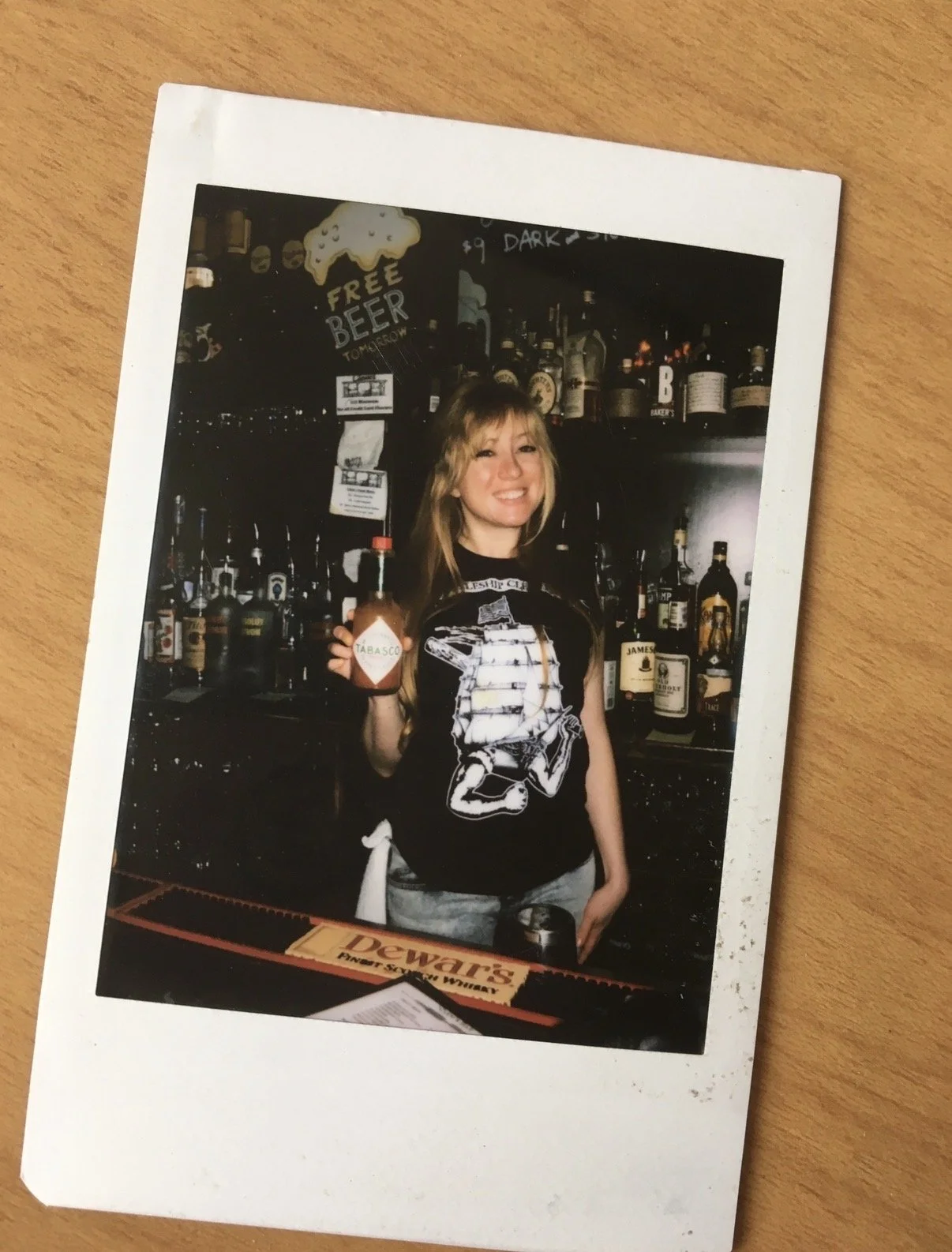
Younger me slinging hot sauce behind the bar to pay for grad school
My first real "come to Jesus" moment happened years ago during my Pilates teacher training. I was heading into the city for my lesson on a Wednesday afternoon, and I was so hungover from some nonsense the night before that I was clutching the subway pole for dear life. Facing a series of inversions on the short box, I genuinely thought I might pass out or puke on the apparatus. I decided then and there that I had absolutely no room for hangovers in my life, and thus, no room for excessive drinking. It would be a decade before I had another hangover.
But what actually qualifies as "excessive"? The official guidelines seem to change every five minutes, or they announce that there is “no safe level” of alcohol consumption, (which probably doesn’t mean what we think it means) and the cultural goalposts are always moving. We have to decide for ourselves what moderation and balance look like.
my “Marie Kondo” approach to drinking
A couple years after that subway realization, I decided to truly take the reins. I wasn't looking to change my whole personality or adopt a dogmatic lifestyle, but I wanted clarity. So, I started counting my drinks each week.
Think of it like a Marie Kondo approach to alcohol: holding up the habit, looking at the data, and asking, Which of these drinks truly brings me joy, and which ones am I just having out of course of habit?
When I first tallied it up, my weekly number was 34.
I know that sounds insane, but you can let go of your pearls now because while that might sound like a lot to some of you, I was already quite moderate compared to my social circle at the time. I didn’t "get drunk." I just had a vibrant social life, worked in an environment where alcohol was present, and loved wine with dinner.
Seeing that number was a shock, but it was also incredibly freeing. I pretty immediately cut it in half, spending quite a while in the 17-drinks-a-week range. From there, I set little goals for myself to bring it down to 10. (Which still sounds like a lot to some, but keep in mind, I still maintained one 10-hour bartending shift a week at the time, and I had certain professional obligations.)
And after a while, moderation simply became my habit. Over time, I just became the kind of person who drinks less.
Now, it’s also true that I had a couple of babies during that timeframe, which makes it much easier to abstain for chunks of time—and also turns you into an absolute lightweight. But as all "wine moms" know, parenting stress is real. Giving yourself to other people all the livelong day makes you really, really want a grown-up treat for yourself at the end of it.
Today, as long as I’m under double digits for the week, I feel okay about it. But it is a constantly evolving process.
For a long time, it’s been my practice not to drink during the week. At first, that boundary caused a bit of "binge behavior" on Fridays. But I quickly realized that chugging Pinot Grigio at a Friday happy hour just gave me a raging headache by 8:00 PM, so I chilled out on that pretty fast. More recently, I noticed that even weekend indulgences throw off my sleep and wreck my skin, so I’m taking a beat on all of it for awhile to make sure I break the habit.
I can hear what you’re thinking, and no, it’s not just that I’m older and can't hang (even though I am older and definitely can't hang.) It’s that I know myself better now. I am simply better at listening to my body.
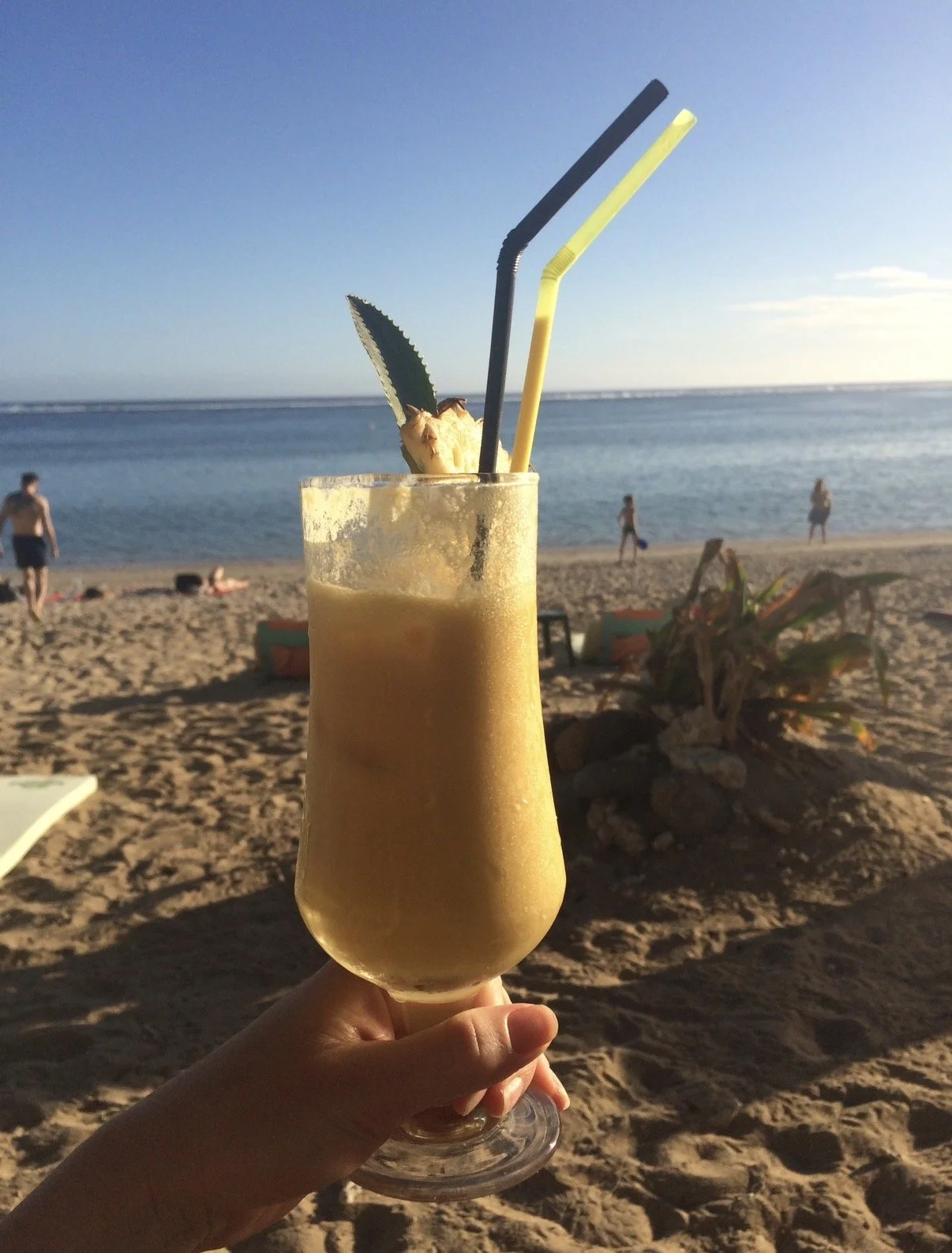
Do you like piña coladas?
live your own story
I am absolutely not here to encourage you to drink alcohol. If you don’t like it, or if choosing total sobriety makes you feel vibrant and alive, that is amazing. Do you. Healthy comes in many varieties.
Alcohol is not innocuous. It’s a powerful substance, and we shouldn't treat it mindlessly. At the same time, we shouldn't let internet strangers dictate our personal boundaries through shame and virtue signaling. Balance is highly personal, and we all have to define it for ourselves.
As we move into June, my challenge to you inside and outside the studio is this: Make sure you aren’t just following the beliefs of someone else. Make sure you aren’t accidentally living someone else's story just because they yelled it loudest on an Instagram reel.
Listen to your body. Tune into your intuition. Decide for yourself what you believe. And let’s leave the judgment at the door and focus on what actually makes us feel whole.
